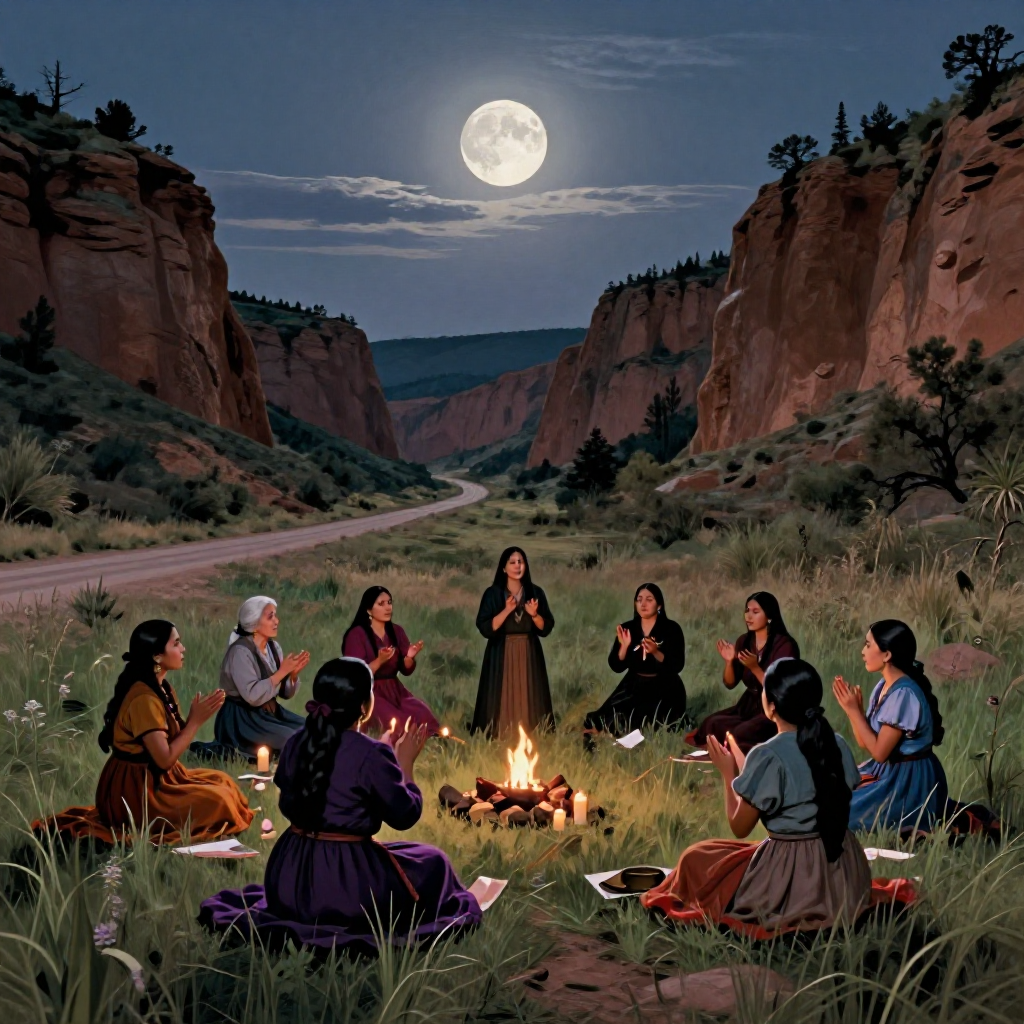
The folklore of the brujas in Northern New Mexico is a rich, often spooky tapestry woven from Spanish Catholicism, Indigenous Puebloan traditions, and the harsh, beautiful landscape of the high desert.
Unlike the witches of New England, who were often viewed through a purely Puritan lens, the brujas of the Southwest exist in a world where the line between a "healer" (curandera) and a "witch" (bruja) can be as thin as a shadow.
The Power of the Crossroads
In New Mexican lore, the crossroads (where two roads or paths meet) are considered "neutral ground" where the laws of the physical world are suspended.
- The Gathering: It is believed that brujas gather at these points to exchange secrets, cast spells, or meet with spirits.
- The Ritual: Folk legends say that if you stand at a crossroad at midnight and bury a personal item, you can gain knowledge or protection—but you might also attract the attention of a bruja looking for a new apprentice.
Shape shifting and the Tecolote
One of the most persistent beliefs is that brujas can transform into animals.
- The Owl (Tecolote): The owl is the most common form. Hearing an owl hoot near your home is often considered a warning that a witch is watching.
- The Salt Test: A famous piece of folklore says that if you suspect an owl is actually a bruja, you should shout, "Mañana vengas por sal" ("Come tomorrow for salt"). If a neighbor shows up the next morning asking to borrow salt, they are secretly the witch.
Historical Roots: The Abiquiú Witch Trials
While Salem is more famous, New Mexico had its own "witch craze" in the mid-1700s in the village of Abiquiú.
- The Conflict: The trials involved Genízaros (Indigenous people who had been captured and then Hispanicized) and Spanish authorities, led by Fray Juan José Toledo.
- The Accusations: Dozens of people were accused of "bewitching" the local priest and causing community-wide illnesses. This history cemented the idea that the northern canyons were hotbeds of supernatural activity. The punishment was minimal as the Spanish authorities did not want to foment trouble.
Tools of the Trade
New Mexican brujería (witchcraft) often uses local materials that carry deep symbolic weight:
- Chimayó Soil: While used for healing by the faithful, it is also said to be used in "earth magic" rituals.
- Red Strings and Cloth: To protect against the Mal de Ojo (Evil Eye) cast by a bruja, children often wear red strings or clothes pinned with a Cruz de Caravaca (a double-barred cross).
- Eggs: Witches are sometimes said to be able to travel long distances by shrinking themselves into small bird and flying through the night.
A Gathering